Connected Histories, Research, and Archives—Interview with Nnamdi Nnake

What stories can the telegraph tell? More than a century after telegraph lines began to stretch across Nigeria, Connected Histories: The Telegraph in Nigeria invites visitors to take a fresh look at a technology that helped shape modern communications, colonial governance, labour, and everyday life. Drawing on the doctoral research of McMaster University PhD candidate Nnamdi Nnake, the exhibition brings together rare artifacts, archival photographs, and multimedia experiences to uncover the often-overlooked history of telegraphy in Nigeria. By tracing how this technology was adapted, maintained, and transformed by local communities, Connected Histories reveals how communication networks are not merely technical systemsbut are deeply connected to people, places, and power. We spoke with Nnake about the research behind the exhibition, its interdisciplinary collaborations, and why these histories continue to resonate today. 

Connected Histories: The Telegraph in Nigeria opens September 1, 2026, at McMaster Museum of Art. Free admission. 

Join us at the Opening Reception on Thursday, September 17, 2026, from 5 p.m. to 8 p.m. No registration required. 
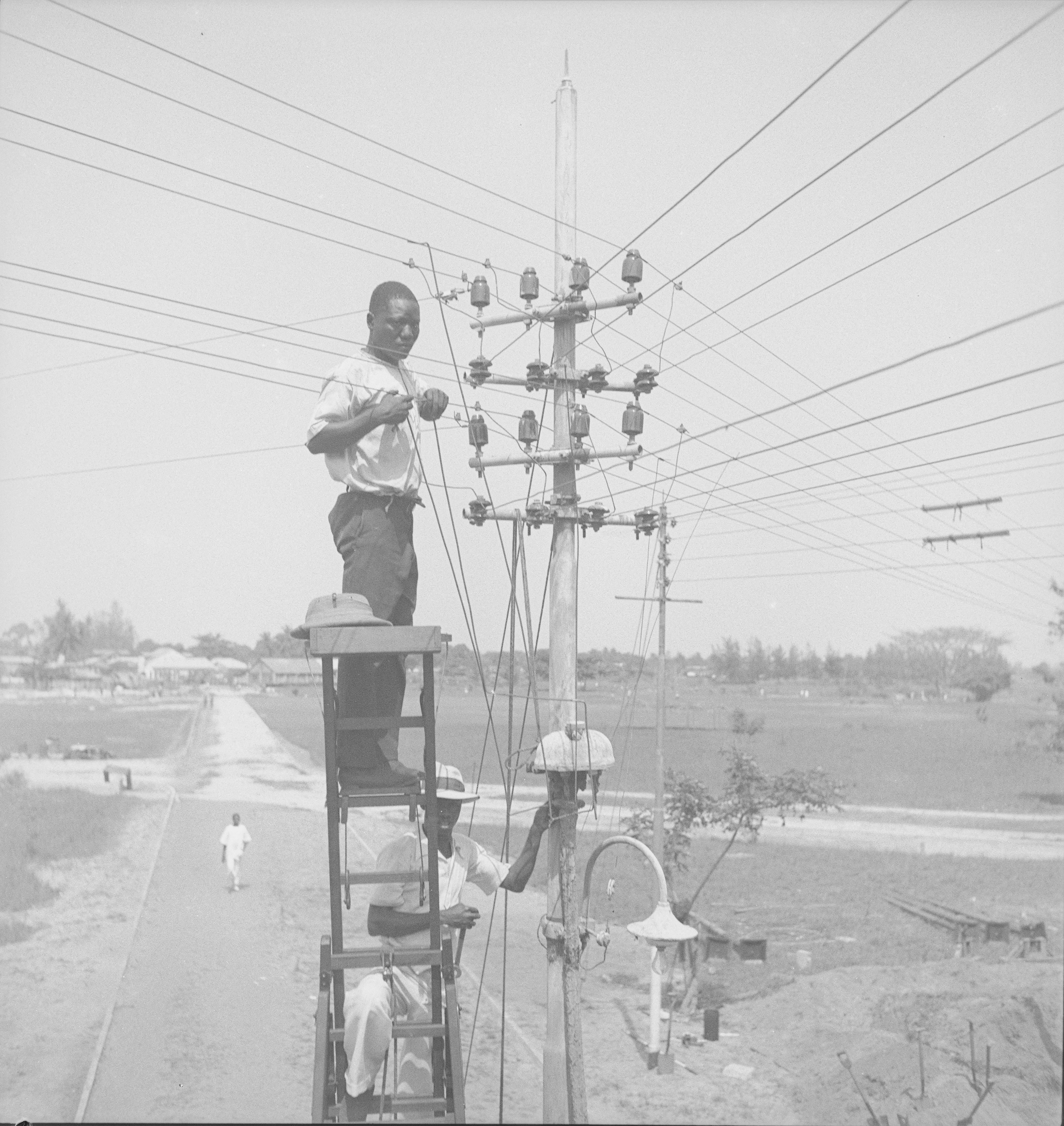
Duckworth, E. H., (British,1894-1972)
Men on a ladder, working on intersecting telegraph, telephone or power lines; street and buildings in the background
Copyright © 2026 the Melville J. Herskovits Library of African Studies, Northwestern University Libraries. Courtesy of the Melville J. Herkovits Library of African Studies E. H. Duckworth Photograph Collection, Northwestern University Libraries


We asked Nnamdi a few questions: 

How has this exhibition idea evolved within your research and through the McMaster network? 

Nnamdi Nnake: My current research is focused on telecommunications development in Nigeria, which traces its origins to the introduction of the telegraph in the late-nineteenth century. But when compared with the Global North, the significance of telegraph networks in Africa is an under-studied area of academic and public scholarship, so it is a privilege to be engaged in developing a body of work that helps to address this gap. In Summer 2025, a colleague familiar with my scholarly interests and public works of history recommended that I curate an exhibition. The idea was captivating but thinking about how to execute it left me with more questions than answers. But that Fall, I met another scholar who had recently curated an exhibition on telegraphy in India and our ensuing exchange was a lightbulb moment.  

This exhibition, Connected Histories: The Telegraph in Nigeria, uses a combination of actual telegraph artifacts and enlarged images to showcase telegraphic communications in colonial Nigeria from a variety of perspectives such as, public use, local innovation, and maintenance, as well as colonial aims and local resistance. Visitors will be immersed in telegraphy via a combination of physical and digital content, such as the simulation of real-life telegraph operations. I am really excited to see how this research and exhibition have come to life.

In my scholarship and research, I enjoy using multimedia like animations, audio, digital art, text, and videos to examine the historical, current and future sociopolitical entanglements of African societies with colonial-era technologies such as railways, telephones, and radioMy goal is to make history authentic, appealing and accessible to audiences while retaining scholarly rigour for current and future usehave adopted this interdisciplinary and cross-medium approach for Connected Histories and hope the exhibition can engage the McMaster community and the wider public.

How does the exhibition relate to our local communities? For example, local African-Canadian organizations, McMaster students and facultyand how are you and the museum planning to engage with the Mac community? 

NN: Everyone has something to learn from the exhibition, even without direct links to Nigeria or Africa. The legacies of telegraphic communications for modern society are numerous. If you rely on telephones, television, radio, the internet, computers, trains, planes, digital banking, and quite literally, anything linked to telecommunications, the exhibition will offer opportunities to learn about the origins of many technologies individuals and societies depend on today. 

More specifically, the exhibition will be useful to McMaster’s academic and research community. In addition to public education, the project outputs include a newly published peer-reviewed essay in Technology and Culture, a globally renowned academic journal and flagship publication of the Society for the History of Technology, as well as an academic seminar presentation. My dream is that thesis-based exhibitions are formalized into an annual competition or systematic pathway for graduate students to develop and further their research. This would deepen institutional collaborations between academic departments at McMaster University and the M(M)A. The exhibition will also collaborate with the University’s ARiEAL Project, which is developing cutting edge visual wearables. So, this exhibition is not only history, but also interdisciplinary fusion of humanities, art, and technology research is quite amazing to be part of. 

Within McMaster, the exhibition will also be useful for undergraduate courses in history, media and communications, or science and technology studies in Fall 2026. For example, students can be invited to conduct visual or other analysis of the exhibits within prescribed learning frameworks and produce academic reports or reflections that are evaluated as a portion of course requirements.   

Finally, I am working with the M(M)A to promote the exhibition with the wider heritage community in Hamilton and the GTA, as well as to African Canadian students and other groups. Because it has digital elements, people can also enjoy Connected Histories from all over the world. 

What is one work that you have a personal connection with? Why? 

NN: Every work curated for this exhibition has special meaning for my research. The more I study them, the more I learn about telegraph technology and the local people who made it possible. Perhaps, I am a little partial to the scene of Mechanicians in the Posts and Telegraphs Workshop at Ebute Metta.
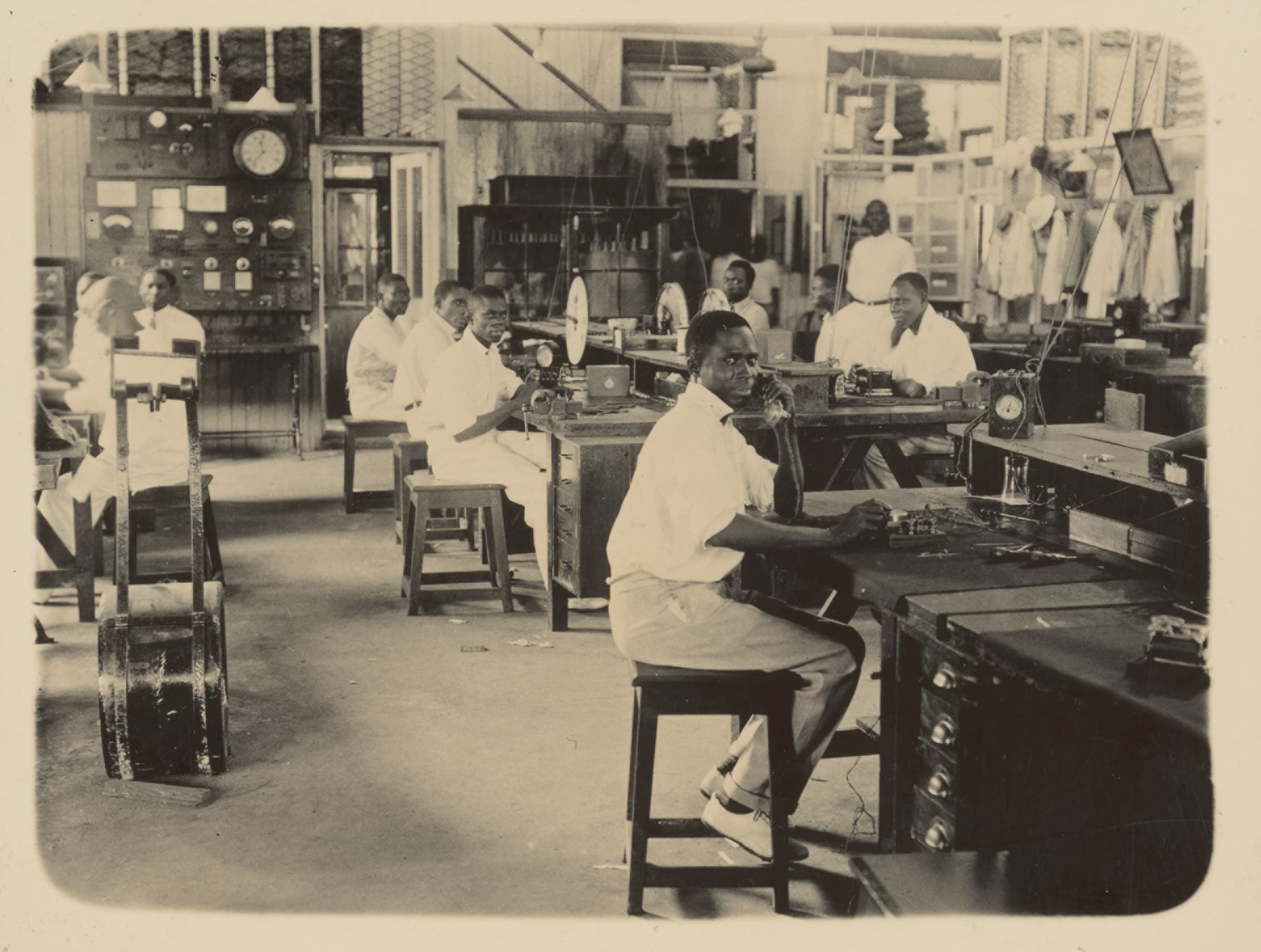
Duckworth, E. H., (British,1894-1972) Men working in the Post and Telegraph workshop, Lagos Copyright © 2026 the Melville J. Herskovits Library of African Studies, Northwestern University Libraries. Courtesy of the Melville J. Herkovits Library of African Studies E. H. Duckworth Photograph Collection, Northwestern University Libraries

The men in the image exude professionalism and confidence in their knowledge and competence for the tasking work of maintenance and repairs that kept the network operational. Yet, these men are part of a largely unnamed but critical colonial workforce of technical professionals. This is an image I find striking for because it represents both presence and absence, which is an apt metaphor for the status of public and scholarly works on the telegraph in Nigeria.  

Speaking to the artifact loans from Ingenium and Northwestern Libraries, how do they complement the museum’s permanent collection and add to the museum and the exhibition? 

NNThe artifacts from our collaborating institutions and the M(M)A’s permanent collection complement one another well. Themes such as altered landscapes and the environmental impact of technological infrastructure permeate throughout both collectionsI am excited that the permanent collection will also be on display. This cross-collection collaboration lends itself naturally to interdisciplinary approaches for curatorial and research work, as symbolizing how the whole is greater than the sum of the two collections. The institutional collaboration that this project has engendered also underscores the M(M)A’s mission as a leading art museum. 


Nnake expressed his deepest gratitude for “the network of knowledge systems and researchers that have enriched and enabled the project.” He also acknowledged the invaluable institutional support provided by Northwestern University Libraries and  Ingenium – Canada’s Museums of Science and InnovationIn particular, Nnake extended thanks to Professors Bonny Ibhawoh, Megan Armstrong, and Juanita De Barros of McMaster University’s History Department, as well as Mary Reid, Director and Chief Curator of the McMaster Museum of Art, whose equal partnership was instrumental in shaping and bringing the project to life.
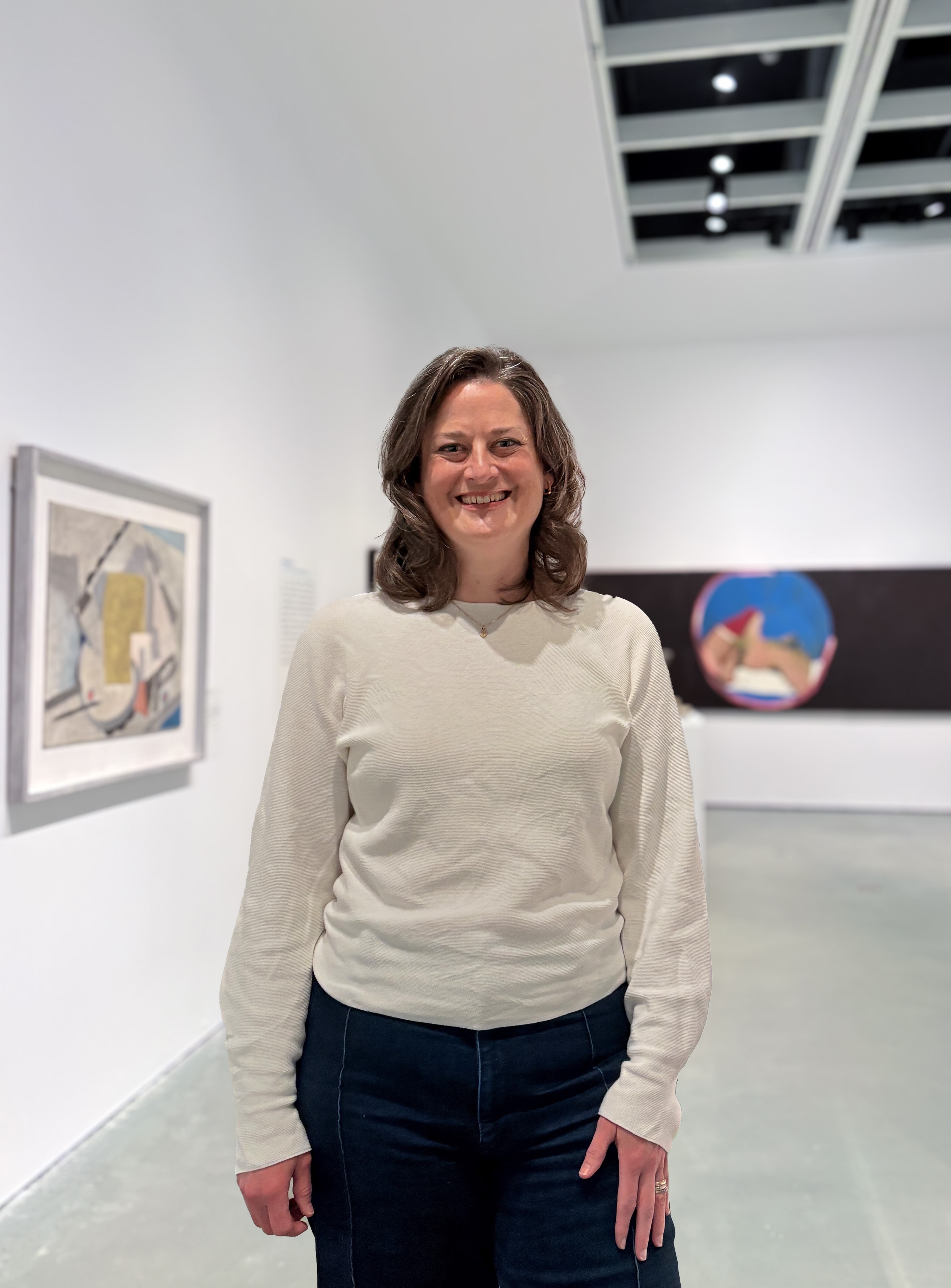
M(M)A Education Staff Teresa Gregorio Shortlisted in City of Hamilton’s Arts Champion Awards

Please join us in congratulating M(M)A’s Educator for Campus & Community Engagement, Teresa Gregorio, for being shortlisted in the Arts Champion Awards in City of Hamilton’s Arts Award 2026. The Arts Champion Awards may be conferred annually to living individuals who are outstanding supporters of the arts in Hamilton as volunteers, advocates, or board members.

Throughout her volunteer work, Teresa has consistently demonstrated integrity, leadership, and a deep sense of responsibility to both her professional community and the public she serves. She contributes her time and expertise to national and local arts and museum education initiatives, including service on the national executive board of Gallery and Museum Educators (GAME) as well as active involvement in Hamilton-based cultural and professional communities, such as Centre [3] and the Hamilton-Area Museum Educators (HME) network.

According to her colleague Nicole Knibb, Senior Educator at the McMaster Museum of Art: “Teresa Gregorio … has made nearly two decades of outstanding contributions to the Hamilton Area Museum Educators (HME) as a dedicated and trusted leader. Throughout her tenure, she has played a key role in planning guest speakers and conferences while fostering meaningful collaboration among member colleagues and institutions. Teresa has also created and diligently maintained HME’s website and social media platforms, significantly strengthening communication and visibility for the organization. Her collegial work with sister institutions, including the Art Gallery of Hamilton, Art Gallery of Burlington, Royal Botanical Gardens, and Hamilton Civic Museums, has positively expanded HME’s reach and impact across the region.”

As Darrell Pinto, Board Chair, Centre[3] for Artistic + Social Practice attests; “Drawing on Teresa’s experience in community education and engagement through meaningful arts-based learning, she serves as a strong asset in her role as co-chair of our Programming Advisory Committee. She contributes thoughtful ideas, sustained energy, and a collaborative approach that strengthens program planning and decision making. Her leadership helps ensure programming remains responsive to community needs and aligned with our mission.”


We asked Teresa a few questions: 

When did you join McMaster/M(M)A, and how has your career at M(M)A and within the city of Hamilton evolved since then?

TG: I became a work/study student at the Museum when I was taking my undergrad back in 2003. Once I graduated, I worked and volunteered at several Hamilton cultural institutions including the Hamilton Museum of Steam & Technology, the Art Gallery of Hamilton, the Dundas Museum and Archives, and of course the McMaster Museum of Art. In 2007 I was hired at the M(M)A as an Information Officer where I had the very important experience of daily connection with museum visitors, and learned how to share information and conduct tours. I’m very glad to say that I’ve grown my career here at the M(M)A and am now the Educator: Campus & Community Engagement.

In the intervening 19 years, with the support of the Museum and its leadership, I’ve cultivated connections with museum educators across the region through my position as a coordinator for the Hamilton-Area Museum Educators group, and more recently with my role on the board for Centre[3] downtown.

What is a career highlight during your time at McMaster/M(M)A?

TG: Getting to collaborate with so many enthusiastic and talented people across and outside of campus! Museum education is all about people, connections, and community, and all my wonderful colleagues and mentors at the M(M)A have allowed partnership opportunities to grow.
A great example is when I worked with Hamilton artist stylo starr to create an education program that we now run online and in person. Working together with others like this makes for a robust, engaging, and fun program and I’m passionate about designing experiences like this because it brings art and arts-based education to people, which is so important for both individuals and communities.

What’s your favourite thing about the art/art education community in Hamilton?

TG: People are so helpful and thoughtful! Educators tend to be a connected bunch, and this certainly shines in Hamilton. If you’re doing research and need something, there’ll be a knowledgeable educator with an enthusiastic reply ready to help. I’ve received a bunch of these emails in just the past week! Hamilton is a wonderful city to build your career in, with welcoming folks and a thriving community. There’s such creativity here, and I’m continually inspired by the interesting, engaging, and cool programming that educator colleagues at Hamilton institutions are making available to us all.

M(M)A Education Staff Nicole Knibb Receive President’s Awards for Outstanding Service in 2025

Please join us in congratulating M(M)A’s Senior Educator (Academic and Professional Engagement) and Adjunct Professor in the Department of Family Medicine, Nicole Knibb, for receiving the President’s Awards for Outstanding Service in 2025. 

Nicole Knibb has made a profound and lasting contribution to interdisciplinary education, community engagement, and inclusive pedagogy at McMaster University. Through her leadership at the McMaster Museum of Art and as an Adjunct Assistant Professor, she has connected visual art with health education, professional learning, and social reflection. Grounded in decolonial practice, equity, and mentorship, Nicole’s work strengthens learning, research, and community connection. Her sustained innovation and leadership continue to enhance McMaster’s reputation for inclusive, humancentred education.  

Director and Chief Curator Mary Reid congratulated Knibb on stage during the ceremony, and remarked, “over her career, Nicole has demonstrated exceptional leadership, innovation, and sustained impact through her work. Through the implementation of strategic design, delivery, and evaluation of interdisciplinary learning initiatives, Nicole has successfully connected the visual arts with professional, academic, and various other communities across the university and beyond.”  

Nicole is a longstanding cocreator and steward of The Art of Seeing ™, a nationally recognized program that enhances observation, empathy, and reflective practice among medical learners, students, and leaders. Her work has expanded the role of the Museum as an academic partner and positioned McMaster as a leader in artsbased, experiential education. During the pandemic, she led successful pivots to virtual and hybrid delivery, expanding access while maintaining program quality. 

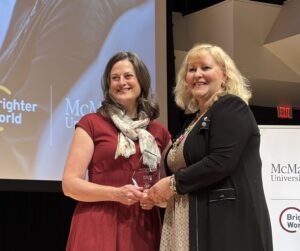
Nicole Knibb (Left) and McMaster President and Vice-Chancellor Susan Tighe (Right) at the President’s Award Ceremony at L.R. Wilson Hall.

We asked Nicole a few questions: 

When did you join McMaster/M(M)A, and how has your career at McMaster/M(M)A evolved since then?

NK: I began working at the M(M)A as a volunteer and as a work-study student in my third year in 1997. After graduating in 1999, I was hired full-time as an Information Officer. This role allowed me to build skills in art museum education, speaking with visitors and leading guided tours about the museum’s collection and exhibitions. In 2017, I became Senior Educator where I specialize in Health Humanities Art Education and Experiential Learning at the M(M)A. Since 2021, I’ve been an Adjunct Professor with the Department of Family Medicine.  

Throughout my career at McMaster and the McMaster Museum of Art (M(M)A), I have championed a number of initiatives. One of the most significant has been the development of the museum’s Education Department. We have built a remarkable team and continue to deliver impactful and engaging programming for our communities. Another initiative I am especially proud of is The Art of Seeing ™, a visual literacy program developed in partnership with Dr. Joyce Zazulak and the Department of Family Medicine. Through this collaboration, Joyce and I have had the opportunity to work with many inspiring individuals on a wide range of programs and projects that extend beyond the original scope of the partnership. 

I would also highlight the Futures Thinking and design work I have undertaken with Dr. Sean Park. Drawing on the expertise I developed through my Master of Design degree in Futures Thinking, it has been incredibly rewarding to translate these ideas into meaningful projects and real-world applications. 

What is a career highlight during your time at McMaster/M(M)A?

NK: This is a hard question. I would have to say the excellent collaborations and partnerships I’ve been part of over the years. There are so many good colleagues and students that I’ve been honoured to work with and learn from. There are too many to count so I hope they will read this and know who they are! 

What’s the story behind the development of The Art of Seeing ™ and what is it like seeing it evolve throughout the years?

NK: The Art of Seeing ™began in 2010. In 2016, inspired by programs at Harvard University and Yale University, we took a big step forward with the help of our McMaster MBA intern Kunal Tandan in expanding the program beyond Family Medicine and into other areas of health education, such as Midwifery—and also more broadly as community engagement. We have just worked with very keen McMaster Integrated Business Humanities fourth-year Capstone students to strategically plan for the future of the Art of Seeing ™. Looking at the expansion of AI, we hope the Art of Seeing ™ program can bolster care and discernment, ultimately the things that are truly human.  


Nicole and Mary wish to extend their thanks to people who shown support of this nomination. These include Victoria Bui, Nancy Buschert, Lorrie Gallant, Dr. Sean Park, Diana Singh, and Dr. Joyce Zazulak. To learn more about the President’s Awards and other recipients, click here to learn more. 

The Clichettes: Lips, Wigs, and Politics featured in CBC Arts

The Clichettes: Trending in the 2020s – In conversation with Maya Ben David and Syreeta Hector

Pushing Against the Stream: Q&A with Artist

nichola feldman-kiss