Leonard Baskin and Typography
November 25, 2014
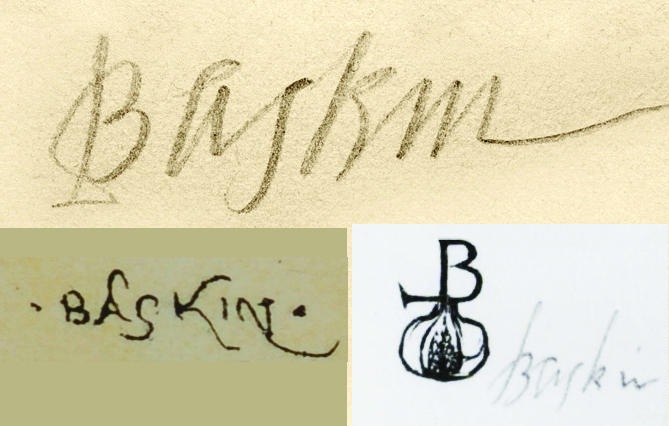
Leonard Baskin labelled himself an “architect of the page”.
The output of Gehenna Press, founded by Baskin in 1942, demonstrates his attention to detail and concern for the artistry of books.
The typography alone makes his approach evident. See this excerpt from the site Artifex: Leonard Baskin and the Gehenna Press.
“Once Baskin reached a mature phase as a book designer in the 1960s, the Gehenna Press favored classic typefaces, particularly those designed and cut by Nicholas Jenson in Venice in the late fifteenth century, and revived in the early twentieth-century. The beauty of these balanced, time-honored letterforms appealed to Baskin’s sense of the history of book making as much as to his aesthetic preferences.”

“Indeed, he crafted his own handwriting, evident in the many signatures and notations on display in this exhibition, as a modern adaptation of Italian Renaissance chancery hand. Baskin later began to appreciate more modern typefaces, including Spectrum (designed by Jan Van Krimpen) and Civilité (designed by Herman Zapf), both of which revived Renaissance letterforms.”
Baskin’s focus on typography is not unfamiliar to our contemporary culture. We’re generally aware of different typographical terminologies. We have the ability to work and play with them on our word processing software every day.
Only a few decades ago, this was not the case.
See this fantastic video (made by a McMaster student) of the history of typography.

Art as the Fifth Pillar of Health: Patricia Bovey to Deliver Keynote Lecture
September 17, 2026

Fall 2026 Exhibitions at the McMaster Museum of Art
September 4, 2026
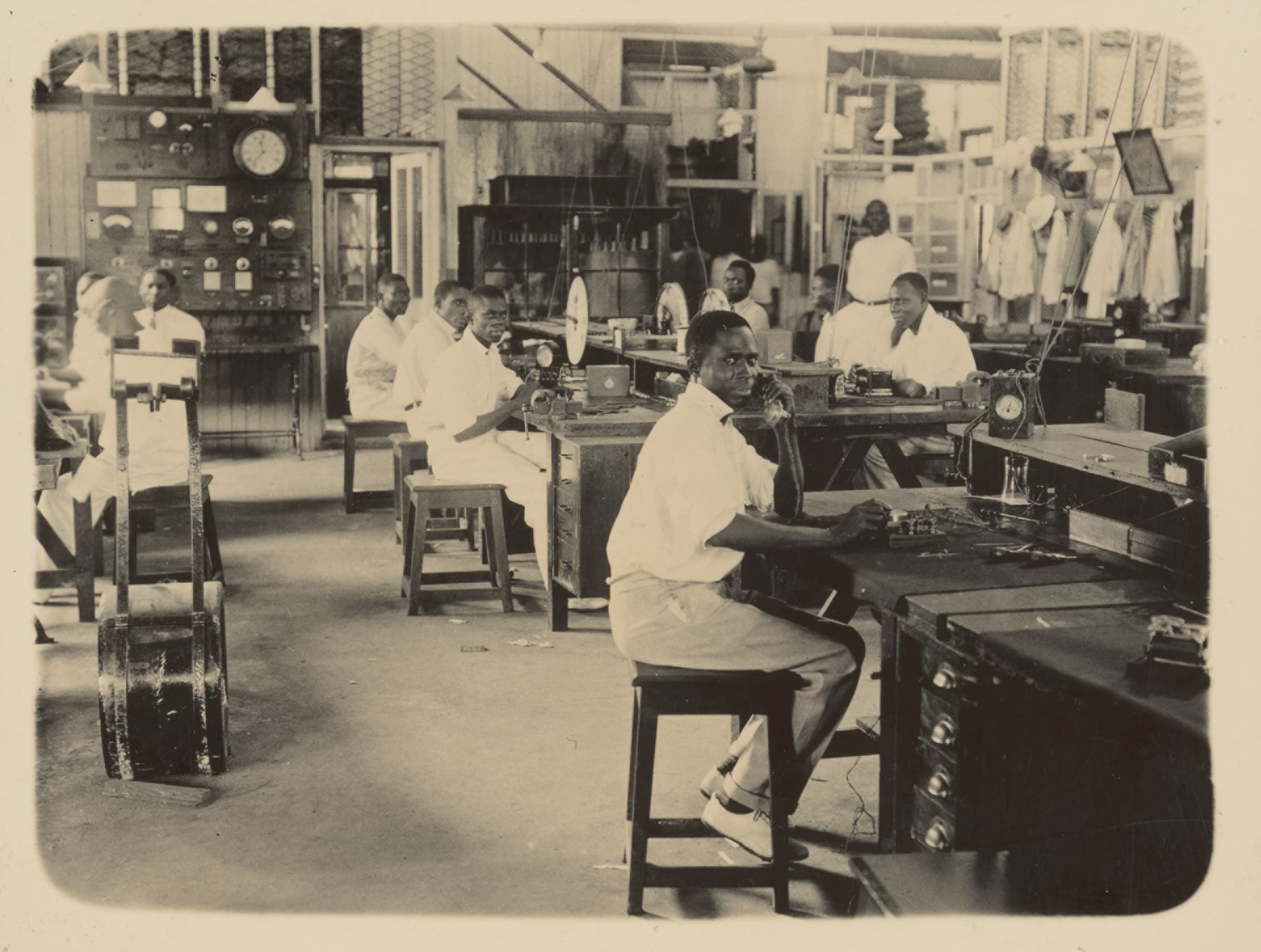
Connected Histories, Research, and Archives—Interview with Nnamdi Nnake
September 1, 2026
What stories can the telegraph tell? More than a century after telegraph lines began to stretch across Nigeria, Connected Histories: The Telegraph in Nigeria invites visitors to take a fresh look at a technology that helped shape modern communications, colonial governance, labour, and everyday life. Drawing on the doctoral research of McMaster University PhD candidate Nnamdi Nnake, the exhibition brings together rare artifacts, archival […]