A History of Copyright – Dürer to today
September 18, 2013
No, don’t click away! Really, despite your possible knee-jerk reaction to a title like “The History of Copyright”, this blog post has some cool stuff to say.
Copyright is something of a hot topic in our contemporary world. With the ubiquity of media, software, and the devices at our fingertips, it’s almost impossible to avoid the remix, the mash up, and even the odd profiteer. Questions are being raised socially, and in some cases legally, about how we as a culture are going to deal with the issue of copyright.
And you wouldn’t be blamed for thinking this is a new problem. But, like so many of the things we think are novel and unique to our modern-selves, the struggle over copyright is an old story.
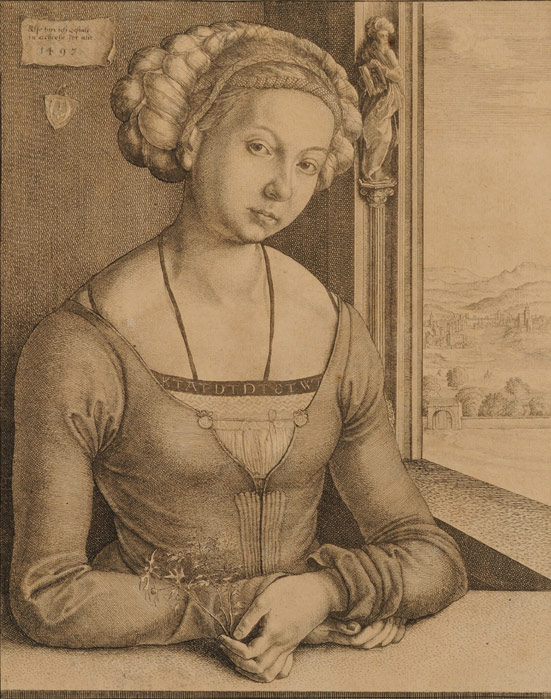
Albrecht Dürer (1471-1528), one of those rare artists who was wildly popular in his lifetime, and has remained popular ever since, had copies of his work made regularly. There’s one such example currently on display in the MMA’s current Worldly Possessions exhibition: Wenzel Hollar, in 1646, produced a print copy of one of Dürer’s works. And that’s a full 118 years after Dürer died.
That sort of copying went on both during the artist’s lifetime as well as posthumously. But it wasn’t until about a century later that much came of it.
Authors too were victims of plagiarism in this copyright-less world.
The very popular writer Hannah Woolley, who was read voraciously by many women of the 17th century, published a book titled “The Gentlewoman’s Companion; or, a Guide to the Female Sex” in 1673. The text instructs its female reader to “know her place” and ensure that she performs the tasks she is suited to as a woman else her husband be left to wander to the tavern and fend for himself in one way or another. Except, of course, that “The Gentlewoman’s Companion” was actually NOT written by Woolley, but by a man with an anti-feminist agenda. With no real legal recourse, all Woolley could do was publish a book subsequently, wherein she entirely refutes the authorship of “The Gentlewoman’s Companion”.
With an interested market, you’ll get people looking to profit. Case in point: Hogarth’s Act of 1734. The name Hogarth might sound familiar. He was an English artist of the 18th century, most famous for his multi-series moral tales and prolific print-producing. This is a person for whom control over the reproduction of his work would not only be control over his public image and life’s work, but also his financial income.
So when Hogarth’s work became really successful, the inevitable “rip-offs” started. People were creating prints, copies from his own work, with the profits going to these criminals rather than to Hogarth himself.
He was riled up enough about this state of affairs that he lobbied the English government with so much vehemence that they named their “Engraving Copyright Act” of 1734 colloquially after Hogarth himself (it’s also interesting to note that the first copyright act of any sort in history was passed only about 25 years earlier in England).
If you come in to the MMA, you’ll see a number of Hogarth’s prints on display. If you look closely you may notice that, in some of these, he’s made a point of adding “Published According to Act of Parliament”.


I’m sure he was quite proud of that legal accomplishment.
And with that in mind, it’s interesting to speculate on the Shipwreck work of Patrick Mahon. Mahon’s work utilizes large-scale printings of some of Hogarth’s images, then visually and literally shattered, and remixed into sculptural line-drawings that have to be seen IRL to be fully appreciated.

FYI: Want to know where Canada stands on copyright? You can read the current Act here: http://laws-lois.justice.gc.ca/eng/acts/C-42/
– Teresa Gregorio, Information Officer, McMaster Museum of Art

Art as the Fifth Pillar of Health: Patricia Bovey to Deliver Keynote Lecture
September 17, 2026

Fall 2026 Exhibitions at the McMaster Museum of Art
September 4, 2026
Connected Histories, Research, and Archives—Interview with Nnamdi Nnake
September 1, 2026
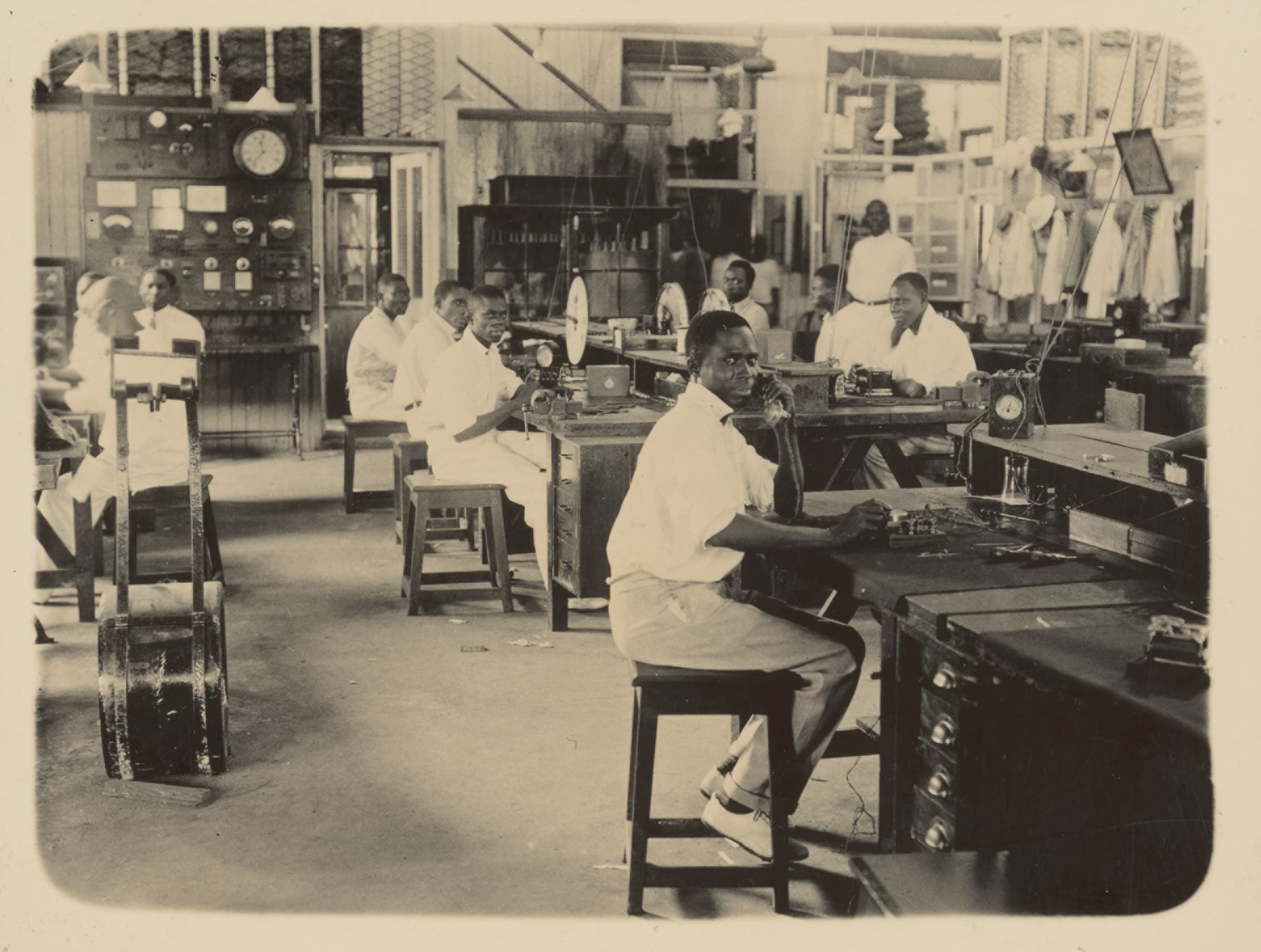
What stories can the telegraph tell? More than a century after telegraph lines began to stretch across Nigeria, Connected Histories: The Telegraph in Nigeria invites visitors to take a fresh look at a technology that helped shape modern communications, colonial governance, labour, and everyday life. Drawing on the doctoral research of McMaster University PhD candidate Nnamdi Nnake, the exhibition brings together rare artifacts, archival […]