Plainsman – Insights from the Artist Ivan Eyre
June 11, 2013
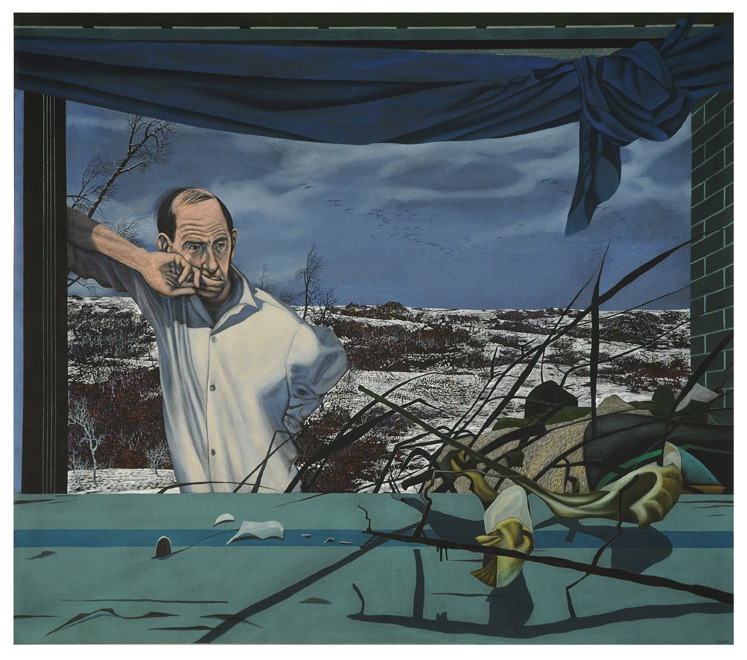
Winnipeg artist Ivan Eyre (1935–) is recognized as one of the most important and prolific Canadian artists of the twentieth century and the McMaster Museum of Art (MMA) is proud to have 3 of his works in our collection. Here the artist offers insightful commentary on the inspiration and development of one of those works, his painting Plainsman.

Hatch Bequest Purchase with the assistance of Wintario,
Collection of the McMaster Museum of Art, McMaster University
I completed a large, graphite preparatory drawing for this painting. The impetus came from a photograph of Samuel Beckett, the famous Irish writer. I was captured by the pose—how his large hand became so much a part of his face, and how his left arm was tucked behind his back. He appears to be in deep thought, while concentrating his gaze.
As I worked on the drawing, the figure changed—losing the Beckett look and becoming a likeness of my late father—Thomas Eyre—a deeply sensitive and thoughtful man. This is especially apparent in his deep-furrowed brow. He admired Chaucer’s work and found mystery in numbers and mathematics.
As a youngster my father toiled on the land, often working to remove fieldstones from the farmland with the use of a horse and stone-boat or gathering hay on a horse-drawn hay-rake. One day, he fell off the equipment and was run over by the rake, which broke ribs.
I think of these things when I look at Plainsman. The snowy landscape represents the kind of terrain he would have known. The unfamiliar still life functions to support the mystery of private thought. The knotted curtain suggests a stage setting, as if the figure and view are part of a kind of puppet theatre presentation, where the “puppet” is larger than life—as if magnified.
This quote was printed in Ivan on Eyre – The Paintings (published by Pavilion Gallery, Winnipeg, Manitoba, 2004)

Art as the Fifth Pillar of Health: Patricia Bovey to Deliver Keynote Lecture
September 17, 2026

Fall 2026 Exhibitions at the McMaster Museum of Art
September 4, 2026
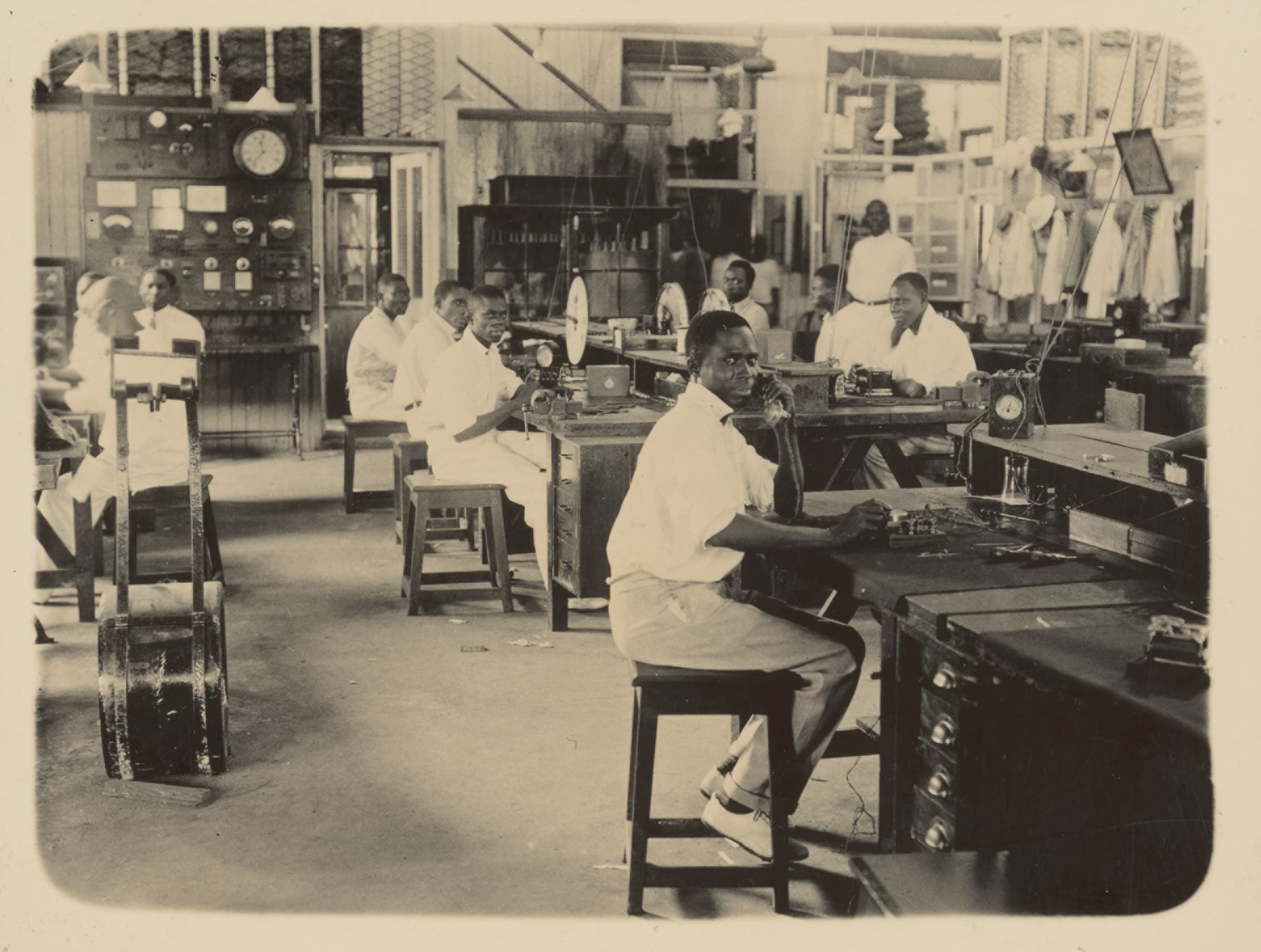
Connected Histories, Research, and Archives—Interview with Nnamdi Nnake
September 1, 2026
What stories can the telegraph tell? More than a century after telegraph lines began to stretch across Nigeria, Connected Histories: The Telegraph in Nigeria invites visitors to take a fresh look at a technology that helped shape modern communications, colonial governance, labour, and everyday life. Drawing on the doctoral research of McMaster University PhD candidate Nnamdi Nnake, the exhibition brings together rare artifacts, archival […]