FAQ in the Midnight Sun Exhibition
July 3, 2018
As one of the Museum’s Information Officers, Jasmine Mander guides tours and answers visitor questions in our various exhibitions. Here, she addresses some of the most frequently asked questions about the summer exhibition The Midnight Sun Camera Obscura Project.
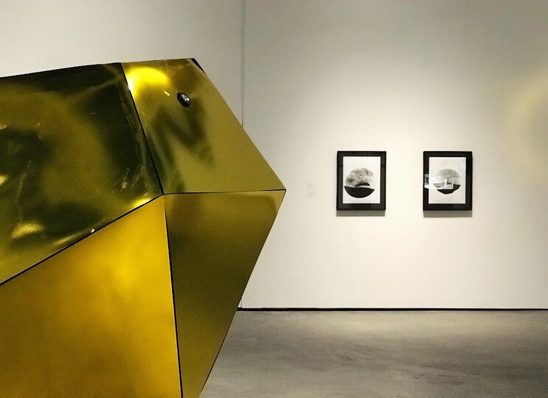
The exhibition is the result of a Festival that brought together artists and researchers from all over the world. They took their love of science and art to Canada’s northern town of Dawson City, Yukon during the summer of 2015. They used this location as a meeting spot, creating installations and art work that turned the entire town into an outdoor art gallery. Of the 13 artists/researchers, 8 have projects that are currently featured in the Midnight Sun Camera Obscura Project exhibition. From poster takeaways to a walk-in camera obscura, there is a lot to discover!
Q: What is a camera obscura and how does it work?
A: A camera obscura is a darkened space into which light is projected through a small aperture (sometimes aided by a lens). Inside the space, the light casts an inverted and reversed image of the surrounding view (left to right and upside down) onto a surface. The term “camera obscura” also refers to constructions or devices that make use of this principle within a box, tent, or room.

Q: Why was Dawson City, Yukon chosen as the location of the festival?
A: During the summer solstice period, Dawson City receives around 20 hours of sunlight each day, making it the perfect location to host a festival centred on the Camera Obscura, a device dependent upon light. The city is known as the home of the 24 hour “midnight sun.”
Q: How does the infinity box work?
A: There are several different elements that act together to produce the effect of an infinity mirror, pictured above. Light and two-way mirrored surfaces must be present in order for this effect to occur. The reflective surfaces bounce a beam of light back and forth an infinite number of times, allowing the viewer to see an infinite number of reflections.

Q: What is the history of camera obscura and its significance?
A: The camera obscura technique is important historically in the development of photography. Camera obscura images always capture movement, so you are experiencing a real moment in time when using this device. This ancient act of viewing a moving image in a darkened space is what inspired the beginning of cinematography.

The Midnight Sun Camera Obscura Project is on display now until August 18th, 2018.


Art as the Fifth Pillar of Health: Patricia Bovey to Deliver Keynote Lecture
September 17, 2026

Fall 2026 Exhibitions at the McMaster Museum of Art
September 4, 2026

Connected Histories, Research, and Archives—Interview with Nnamdi Nnake
September 1, 2026
What stories can the telegraph tell? More than a century after telegraph lines began to stretch across Nigeria, Connected Histories: The Telegraph in Nigeria invites visitors to take a fresh look at a technology that helped shape modern communications, colonial governance, labour, and everyday life. Drawing on the doctoral research of McMaster University PhD candidate Nnamdi Nnake, the exhibition brings together rare artifacts, archival […]