McMaster U
Exhibitions
  • Current
  • Upcoming
  • Past
  • Publications
  • Submissions + Assistance
Collections
  • eMuseum
  • Recent Acquisitions
  • Public Art Commissions
  • Coin Collection
Education
  • Group Tours + Classes
  • Education Programs
  • The Art of Seeing Program
  • Research Appointments
About
  • Mission + Vision
  • Staff Directory
  • News
Visit
  • Directions + Hours
  • Tours
  • Events
  • Library
  • Room Bookings
Support
  • Membership
  • Volunteer
  • Donate
  • Supporters

Food for Thought: Ahnisnabae Art Panel

February 13, 2013
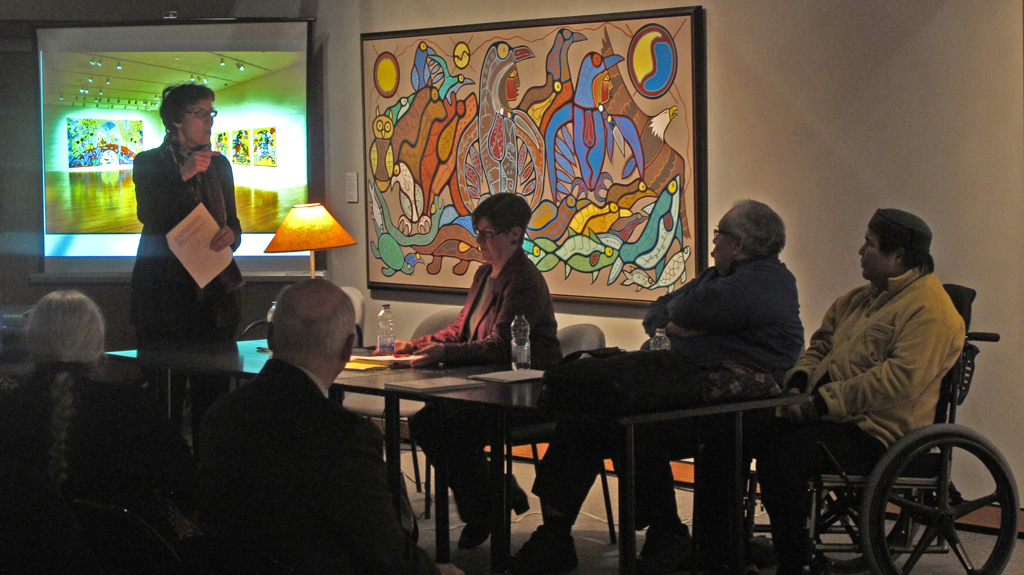
Panel Discussion. From left: Ruth Phillips, Elizabeth McLuhan, Tom Hill, Ahmoo Angeconeb

Last week, the Museum hosted an panel discussing Ahnisnabae Art and the search for a new critical context for First Nations Art History. We were thrilled at the wealth of expertise, experience and wisdom that came to the table that evening. Following opening remarks by the late Roy Thomas’s wife, Louise Thomas, the panelists were introduced. They were:

Ahmoo Angeconeb (artist)
Tom Hill (curator, writer, lecturer, art historian)
Elizabeth McLuhan (independent curator, art historian)
Ruth Phillips (art historian, Canada Research Chair in Modern Culture, Carleton University)

Fascinating presentations by each speaker were followed by lively discussion. Here are some photos from the event and a couple of quotes brought forward by Dr. Phillips that evening – food for thought and further discussion.

While studying art at school, I began to form a political and cultural awareness. I soon developed a desire to reflect these ideas in the artwork that I would create and began to search for a culturally relevant means of expression. A fellow student showed me a catalogue of Morrisseau’s work and I was deeply intrigued. They communicated knowledge and pride in an indigenous view of the world. The works appeared to come from an ancient place, but the brightly painted canvases also spoke the language of the modern world in ways that I thought challenged the work of the celebrated western artists that we studied at school.

– Greg Hill, “Preface” to Greg Hill ed., Norval Morrisseau: Shaman Artist, (Ottawa: National Gallery of Canada)

Indigenization presumes an affinity of some sort between the cultural practices from elsewhere and those in the indigenizing location. Hostile soil does not allow transplantation to take hold. Conversely, the practices that take hold in their new location are changed in the process.

– From Susan Stanford Friedman, “Periodizing Modernism: Postcolonial Modernities and the Space/Time Borders of Modernist Studies,”Modernism/Modernity 13 (3) (2006)

Opening remarks by Louise Thomas
Panel Discussion. From left: Ruth Phillips, Elizabeth McLuhan, Tom Hill, Ahmoo Angeconeb
Panel Discussion on Ahnishnabe Art. At the McMaster Museum of Art where Roy Thomas exhibition is on view to February 23.
Panel Discussion on Ahnisnabe Art. At the McMaster Museum of Art where Roy Thomas exhibition is on view to February 23.
Dr. Elizabeth McLuhan describing Roy Thomas's painting during Panel Discussion
Dr. Elizabeth McLuhan describing Roy Thomas’s painting during Panel Discussion

Panel Discussion on Ahnishnabe Art. At the McMaster Museum of Art where Roy Thomas exhibition is on view to February 23.
Panel Discussion on Ahnisnabe Art. At the McMaster Museum of Art where Roy Thomas exhibition is on view to February 23.

VIEW ARCHIVE
Link to News Archive for a complete list of past news articles

Fall 2026 Exhibitions at the McMaster Museum of Art
September 4, 2026
Read More

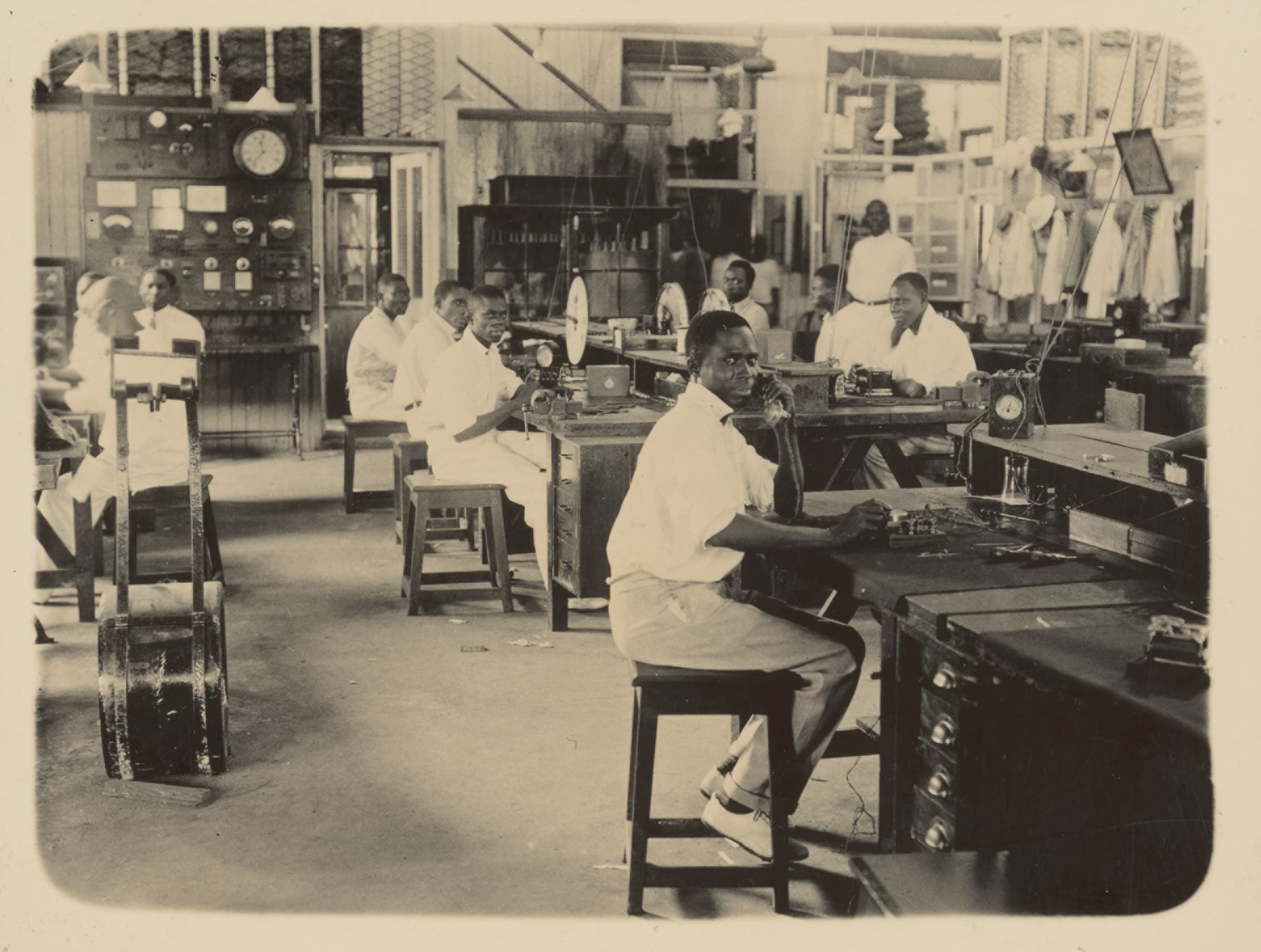
Connected Histories, Research, and Archives—Interview with Nnamdi Nnake
September 1, 2026

What stories can the telegraph tell? More than a century after telegraph lines began to stretch across Nigeria, Connected Histories: The Telegraph in Nigeria invites visitors to take a fresh look at a technology that helped shape modern communications, colonial governance, labour, and everyday life. Drawing on the doctoral research of McMaster University PhD candidate Nnamdi Nnake, the exhibition brings together rare artifacts, archival […]

Read More

M(M)A Education Staff Teresa Gregorio Shortlisted in City of Hamilton’s Arts Champion Awards
June 23, 2026

Please join us in congratulating M(M)A’s Educator for Campus & Community Engagement, Teresa Gregorio, for being shortlisted in the Arts Champion Awards in City of Hamilton’s Arts Award 2026. The Arts Champion Awards may be conferred annually to living individuals who are outstanding supporters of the arts in Hamilton as volunteers, advocates, or board members. […]

Read More

Contact

Tel.:  905-525-9140
Ext.:  23081 for main menu
Ext.:  23241 for reception desk
Email:  museum@mcmaster.ca
Map and Directions

Admission

Pay what you can, if you can, with a suggested donation of $5.00

If there is an AODA web accessibility issue with this website, please email museum@mcmaster.ca

All galleries are wheelchair accessible. Read more about accessibility at McMaster.

Hours

Tuesday 12pm-5:00pm
Wednesday 12pm-5:00pm
Thursday 12pm-7:00pm
Friday 12pm-5:00pm
Saturday - Monday Closed

Closed statutory holidays

Sign up for our invitations

Enter your e-mail below

black MMA logo
  • black instagram logo
  • black facebook logo
  • black youtube logo
  • logo of LinkedIn

McMaster University recognizes and acknowledges that it is located on the traditional territories of the Mississauga and Haudenosaunee nations, and within the lands protected by the Dish With One Spoon wampum agreement.

© 2021 McMaster Museum of Art | Alvin A. Lee Bldg, University Ave | McMaster University | 1280 Main St W | Hamilton, Ontario L8S 4L6 | 905-525-9140 | Contact | Terms of Use & Privacy Policy

  • black instagram logo
  • black facebook logo
  • black youtube logo
  • logo of LinkedIn
black MMA logo
black mcmaster university logo